
Sports injuries need fast, accurate assessment — the sooner you understand what’s actually going on, the sooner you can start the right treatment and avoid making things worse. Our physiotherapists manage everything from acute sprains and strains to impact injuries, with a clear focus on getting you back to training and competition safely, not just quickly.
Understanding sports injuries
Sports injuries generally fall into two categories: acute traumatic injuries (a specific moment — a tackle, a landing, a twist) and overuse injuries that build gradually from repeated load. Both require accurate diagnosis, but acute injuries in particular benefit from early assessment, since the first 48–72 hours often shape how the following weeks of recovery unfold.
Injuries we commonly treat
- Ankle and knee ligament sprains — from rolling, twisting, or landing awkwardly
- Muscle strains — hamstring, calf, and quad strains are among the most common in field and court sports
- Impact and contact injuries — corking, bruising, and joint injuries from direct contact
- Recurring niggles — nagging issues that flare up during pre-season or heavier training blocks, often signalling an underlying capacity gap
What we assess
- The specific structure involved and the grade/severity of injury
- Swelling, range of motion, and weight-bearing status in the acute phase
- Strength and movement deficits contributing to the injury (particularly for recurring issues)
- Your sport’s specific demands, to guide a relevant, not generic, return-to-play plan
Our evidence-based approach
The clearest message from return-to-sport research is this: the criteria used to clear an athlete matter more than the calendar. Studies show athletes who pass objective return-to-sport testing — strength symmetry, hop and performance benchmarks, and psychological readiness — have a re-injury rate of around 5.6%, compared to over 38% in those who return based on time elapsed alone. Our approach includes:
- Prompt, thorough assessment to confirm diagnosis and severity
- Early-stage management of pain and swelling using appropriate hands-on treatment and loading
- Progressive rehabilitation rebuilding strength, control, and sport-specific movement
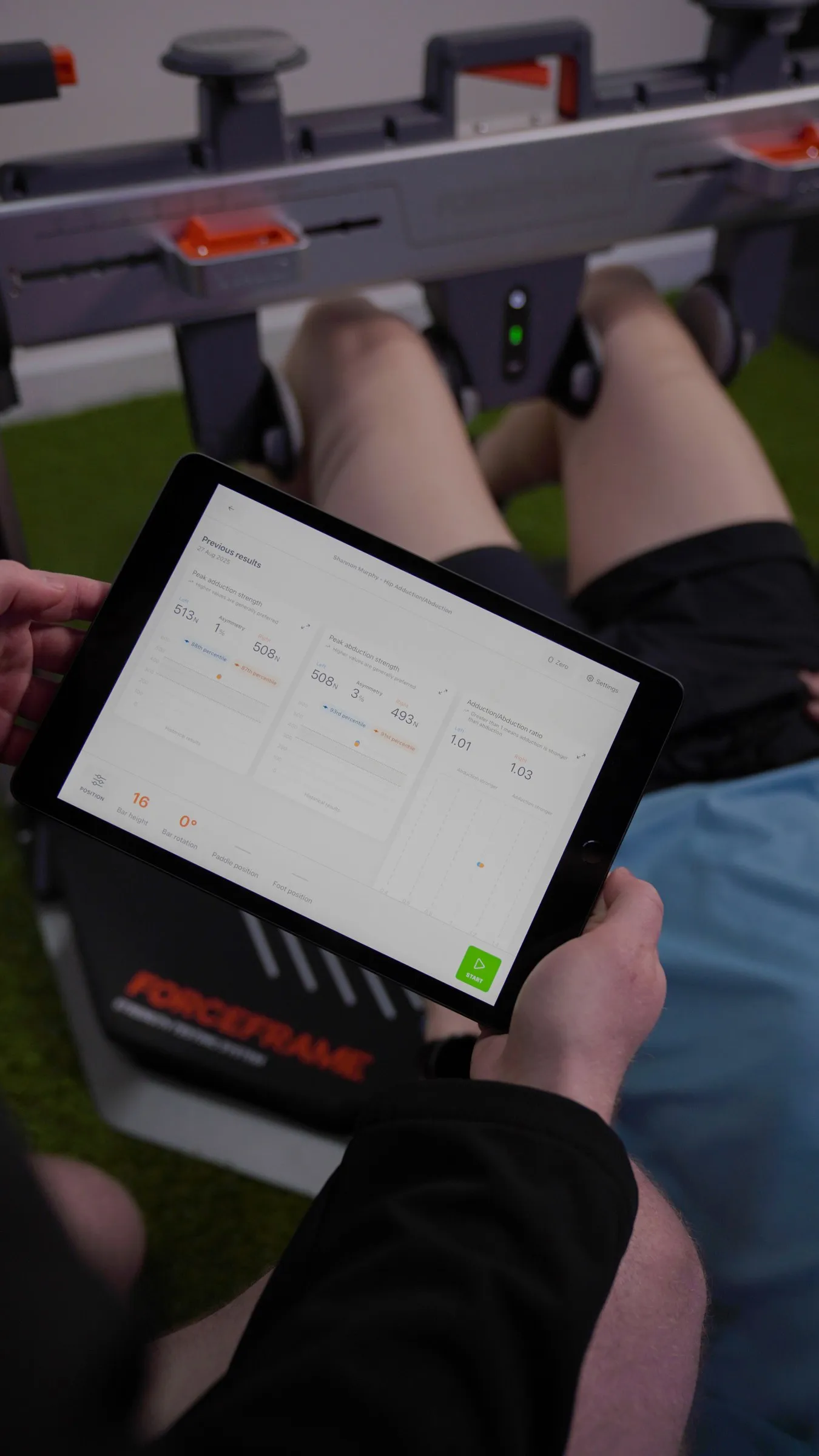
- VALD performance testing to objectively measure strength symmetry and readiness
- Sport-specific return-to-play criteria, not a fixed timeline, before clearing you for full training or competition
What to expect: recovery timeline
- Mild (grade 1) sprains and strains: often 1–3 weeks
- Moderate (grade 2) injuries: typically 4–8 weeks of structured rehabilitation
- Severe (grade 3) injuries, including complete ligament or muscle tears: may require several months, and in some cases surgical review
- Recurring niggles: usually benefit from an injury prevention screen to address the underlying capacity gap, rather than repeated short-term treatment of the same issue
When to seek help urgently
Book an assessment promptly for any injury involving an audible pop, immediate significant swelling, inability to weight-bear, or visible deformity — these warrant same-day evaluation.