
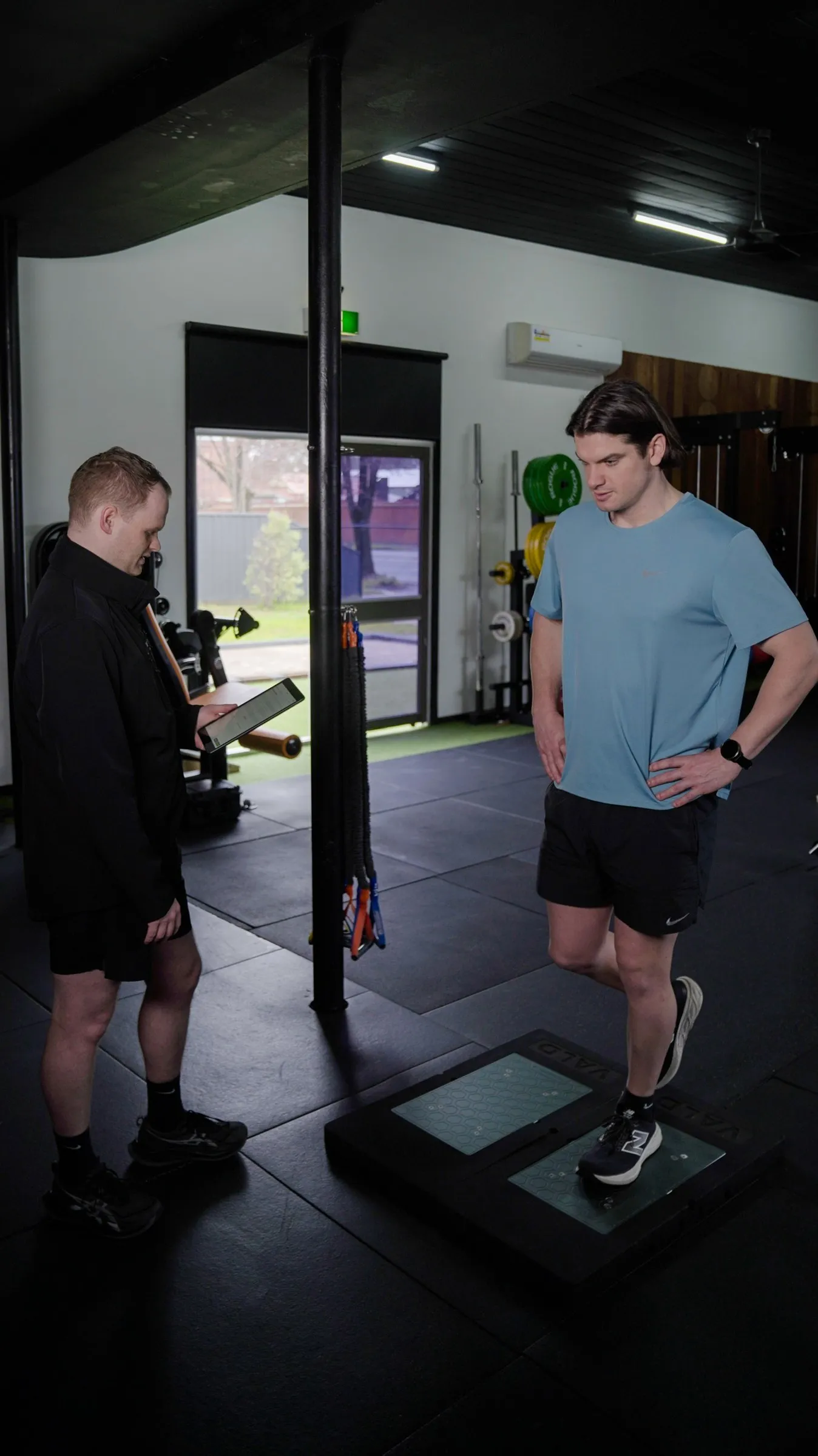
Most injuries don’t happen out of nowhere — they’re often preceded by identifiable strength, mobility, or movement pattern deficits that exist well before pain shows up. Our injury prevention screening is designed to catch those risk factors early, using the same objective testing technology used in professional return-to-sport decisions.
Why screening matters
Research into training load and injury risk is clear on one point: sudden, unplanned increases in load are one of the strongest predictors of injury. In runners specifically, a 30% jump in weekly distance has been shown to increase injury risk by 64%, and doubling your longest recent run more than doubles it. Strength asymmetries between limbs — often left over from a previous injury — are another well-documented risk factor that can persist long after pain has resolved.
What we assess
- Strength symmetry between left and right sides, using VALD performance testing for objective, repeatable data
- Movement quality under load — how you squat, land, change direction, and control your body during dynamic movement
- Mobility and flexibility relevant to your specific sport or activity
- Previous injury history, since prior injury is one of the strongest predictors of future injury if underlying deficits weren’t fully addressed
Our evidence-based approach
Broad, generic injury prevention programs have shown limited effect in research, but supervised, individualised screening and intervention consistently performs better — likely because it targets your actual deficits and you’re more likely to follow through on a program built specifically for you. Our approach includes:
- Objective testing using VALD technology to remove guesswork from strength and movement assessment
- Identification of specific risk factors — asymmetries, deficits, or movement patterns relevant to your sport
- A targeted plan addressing what we actually find, not a generic “prevention” template
- Practical load management guidance, particularly for runners and endurance athletes, where training load errors are one of the most common and preventable injury causes
Who this is for
Ideal for pre-season preparation, a return to training after time off, athletes with a history of previous injury, or simply as a proactive check-in for anyone serious about their training. Combine with our Performance Testing service for a complete picture of your current strength and readiness.