
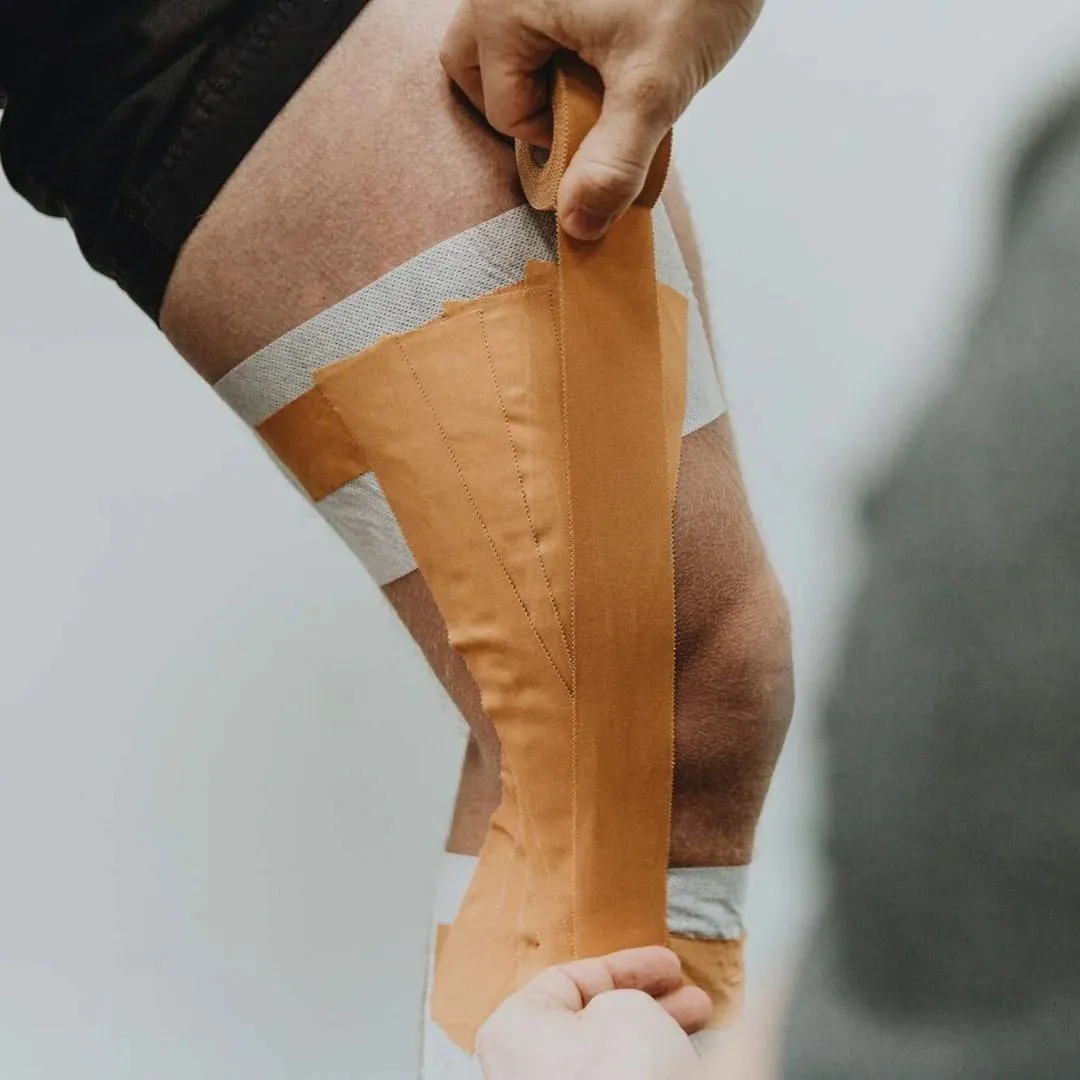
Whether it’s supporting an ankle through pre-season training or providing proprioceptive feedback for a recovering shoulder, taping and strapping is a simple, practical tool used to protect injuries and support confident movement while the underlying issue is being properly addressed.
When taping is useful
- Ankle, knee, and shoulder support during sport, particularly for athletes managing a niggle through a competitive season
- Load management for tendon and joint-related niggles, reducing stress on a specific structure during activity
- Proprioceptive feedback during rehabilitation, helping retrain awareness and control around an injured joint
- Confidence during return to sport, particularly in the period between finishing formal rehabilitation and full unrestricted training
Types of taping we use
- Rigid strapping tape — firmer support, typically used to help limit a specific risky movement (such as ankle inversion) during high-demand activity
- Kinesiology tape — more flexible, generally used for proprioceptive feedback and mild support rather than restricting movement
Important context
Taping is generally used alongside — not instead of — a proper rehabilitation plan. It can be a genuinely useful bridge while you’re working through an active treatment program for conditions like ankle and knee ligament sprains or shoulder instability, but it isn’t a substitute for addressing the underlying cause. Your physiotherapist will guide you on the right taping approach for your specific injury, and whether self-taping between sessions is appropriate for your situation.